

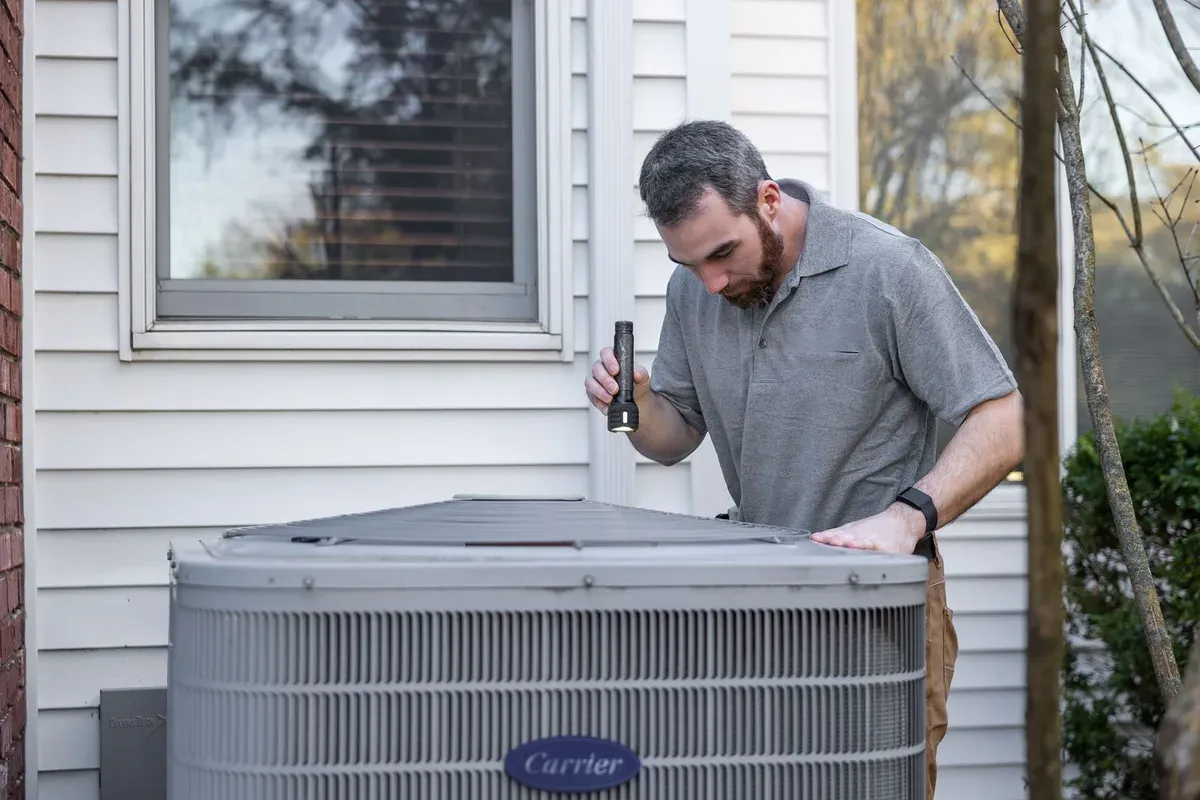
AI Receptionist for Plumbers, HVAC & Home Services
Home service businesses miss about 27% of inbound calls, and urgent callers don't wait. See how an AI receptionist answers every call and books more jobs.
John Park, Founder, Nebula AI10 min read
- What is an AI receptionist for a home-services business?
- How does an AI receptionist actually work?
- Why contractors and tradies lose jobs to missed calls
- What home-services businesses are seeing
- What does it cost and how fast can it go live?
- Is this replacing my staff or my answering service?
- Is an AI receptionist right for your home-services business?
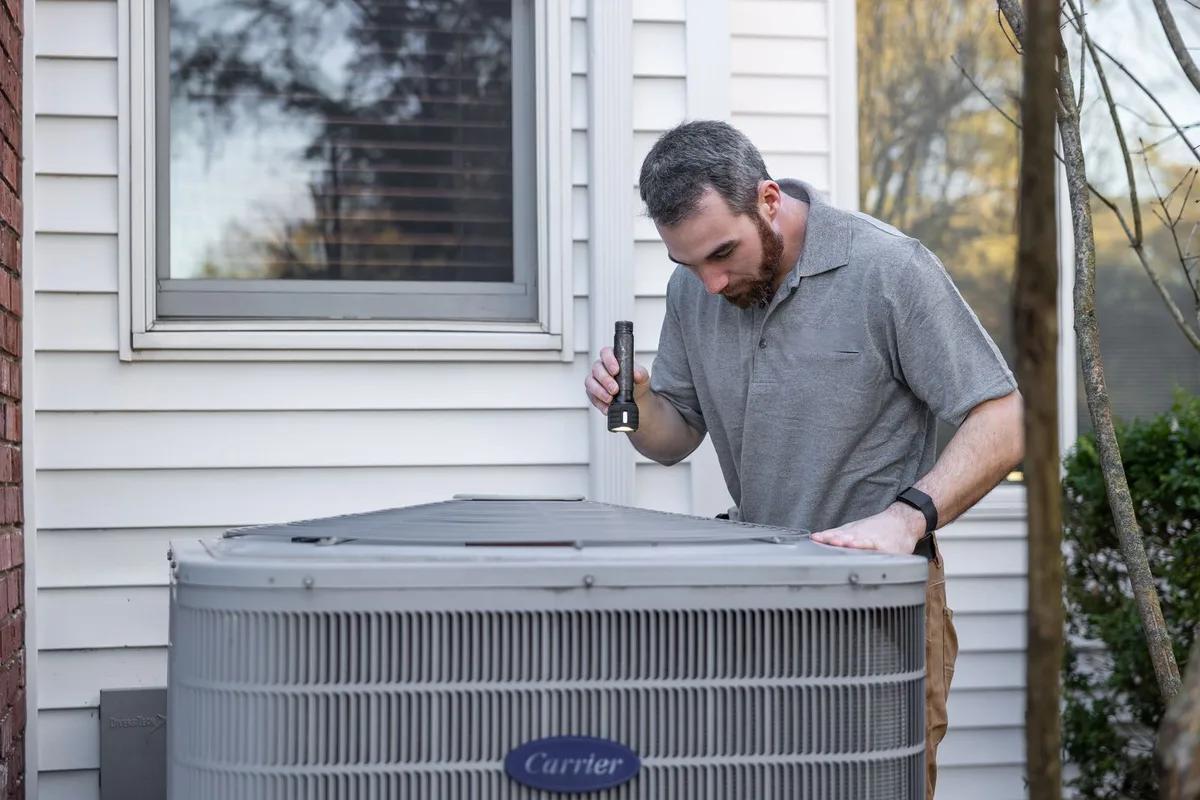
The short version: Home service businesses miss roughly a quarter of their inbound calls, and a caller with a burst pipe or a dead AC unit does not leave a voicemail. They call the next company. An AI receptionist answers every call day and night, figures out the job, books the good ones straight into your schedule, and routes real emergencies to your on-call tech. Below: how it works, what contractors are seeing, and what it costs.
It is 11 p.m. The crew is asleep. A homeowner two suburbs over is standing in an inch of water, phone in hand, calling every plumber Google shows them.
Your phone rings. Nobody picks up. It goes to voicemail.
That caller does not leave a message. They hang up and dial the next number. The job you paid to advertise for just went to a competitor while your team slept.
This is not a rare event. Per Invoca's 2025 home services benchmarks, built on more than 60 million analyzed calls, about 27% of inbound calls to home service businesses go unanswered. Invoca pegs the value of a single missed call at around $1,200.
That is the gap an AI receptionist closes. Not a phone tree. Not a machine reading a script. A system that answers, understands, and books, every hour of every day.
What is an AI receptionist for a home-services business?
An AI receptionist is software that answers your phone in a natural voice, has a real conversation with the caller, works out what the job is and how urgent it is, books routine work into your schedule, and routes true emergencies to your on-call tech. It works nights, weekends, and holidays, and it never sends a caller to voicemail.
It is not an answering machine. It is not a phone tree with "press 1 for scheduling." It talks, it listens, it books, and it knows when to wake up your on-call tech.
How does an AI receptionist actually work?
You do not need to understand the engineering to run one. Here is the whole thing in four steps.
1. It answers. The moment a call comes in, the AI picks up in a natural human voice, 2 a.m. included. No ringing out, no voicemail, no "our office is currently closed."
2. It understands. The caller talks the way they would to a person. "My water heater is leaking all over the garage." The AI understands plain speech, asks the right follow-up questions, and works out the job type and how urgent it is.
3. It qualifies, books, or dispatches. A routine job gets booked into your scheduling calendar and logged in your CRM on the spot, whether you run ServiceTitan, Housecall Pro, or Jobber. No sticky notes, no lost callback slips. A true emergency gets flagged.
4. It hands off. Real emergencies and existing-customer issues route to your on-call tech with the address and the problem already captured. The crew only gets woken for calls that are worth waking up for.
That is it. Answer, understand, book, hand off. The caller gets a fast answer and a time slot. You get a booked job instead of a missed call.
But won't callers know it's a robot?
A few years ago, yes. Today, no.
Modern voice AI does not sound like the flat, robotic systems you remember. Neural voice tools like ElevenLabs generate speech with natural rhythm, pauses, and warmth. In a November 2025 blind test by Twilio, 90% of consumers could not correctly tell an AI voice from a human one. The catch: 72% of them believed they could.
A caller with no hot water wants a fast answer and a time slot, not a chat about your phone system.
Why contractors and tradies lose jobs to missed calls
A missed call in the trades is not a lost message. It is a booked job walking to a competitor.
Start with the volume. About 27% of home service calls go unanswered, per Invoca. Now layer on when those calls come in. A large share of home service calls land outside the standard 8 a.m. to 5 p.m. window, and plumbing and HVAC emergencies skew hard to nights and weekends. A frozen pipe or a furnace that quits in January does not wait for business hours.
Here is the behavior that kills you: a caller who hits voicemail does not sit and wait for a callback. They move on to the next name on the list. You never even know the call happened.
The reason speed wins is not opinion, it is measured. Harvard Business Review's study The Short Life of Online Sales Leads found that firms which respond to a new lead within one hour are about seven times more likely to qualify it than firms that wait an hour longer. It gets sharper. A widely cited lead-response study from MIT and InsideSales found that reaching a lead within five minutes instead of thirty makes you 21 times more likely to qualify them.
For a contractor or a tradie, the math is simple. The first company to actually answer usually gets the job.
Now put a number on the leak. The cost of a single missed call runs on a range tied to the ticket. A quick service call might be $200 to $500. Blended across all your jobs, Invoca lands it around $1,200. And a big-ticket HVAC replacement, a repipe, or a roof runs $3,000 to $15,000. Every one of those can start with a call your phone sent to voicemail.
You do not have a lead problem. You have a pickup problem. You are paying to make the phone ring, then sending the call to a competitor.
Want your own figure instead of an industry average? The missed call revenue calculator runs your call volume, miss rate, and average ticket and gives you an annual number. It is free and it does not ask for your email.
What home-services businesses are seeing
The theory is fine. Here is what changes when a business answers every call and books the jobs it used to lose. These are published results from real companies, not our numbers, and they show what that outcome is worth. Read the table as proof of the outcome, not proof of any one tool, and see the note below on which front lines ran on people and which ran on AI. More examples live in our roundup of AI voice agent results.
| Business | What they fixed | Result |
|---|---|---|
| Roto-Rooter of Baton Rouge | After-hours emergency calls going to voicemail | Answered after-hours calls and closed 62% of them into booked jobs, with cleaner CRM data |
| AccuTemp | Calls missed outside business hours | $477,908 in new revenue from bookings by answering every call, day or night |
| Camping World (RV retail, AI) | Long hold times and after-hours coverage | 40% increase in customer engagement, 33 seconds cut from wait times, 33% lift in agent efficiency using an AI voice assistant |
Different businesses, different trades, same fix. None of them hired a bigger crew to get these numbers. They stopped losing the calls they already had.
The pattern underneath all three:
✓ Every call answered, day or night, including after hours
✓ Emergencies triaged before anyone gets woken up
✓ Jobs booked straight into the schedule and CRM
One honest note on that table. Some of those front lines ran on live agents, some on AI. The Roto-Rooter and AccuTemp numbers came from teams answering the phone, and Camping World ran a labeled AI voice assistant in a different, big-ticket industry. The lesson is the same either way: an unanswered phone is the leak. What has changed is that AI can now hold that front line at a fraction of the cost of a fully staffed 24/7 desk. We see the same pattern in law firms, where the caller who does not reach a person simply dials the next name.
What does it cost and how fast can it go live?
Straight numbers.
A single AI employee, like a receptionist, typically starts around $3,000 to build plus about $1,500 a month to run. The exact figure depends on your call volume and how many systems it needs to connect to. A single role usually goes live in 1 to 2 weeks. A full department, several roles working together, runs 4 to 6 weeks.
Measure that against one saved emergency job. For most contractors, a single after-hours call the AI books instead of losing pays for months of the system.
Is this replacing my staff or my answering service?
Helping, not replacing. This is the part owners get wrong when they picture AI on the phones.
The AI takes the repetitive first response and the 2 a.m. calls. Your CSRs and techs stop playing phone tag and spend their hours on the work that needs a person and the wrench. If you already run a human answering service, the AI covers the same 24/7 front line without the per-minute meter, and it plugs straight into your schedule and CRM instead of emailing you a message to call back later.
Gartner predicts that AI will autonomously resolve 80% of common service issues by 2029. It also expects many organizations to abandon plans to cut service headcount because of AI. The winning setup is not AI instead of people. It is AI on the repetitive front line, people on the judgment calls and the actual work.
This is becoming standard equipment, not an experiment. Grand View Research values the AI voice agents market at about $2.54 billion in 2025 and projects it near $35.24 billion by 2033. The contractors and tradies moving first are the ones who stop losing after-hours jobs while everyone else debates it.
Is an AI receptionist right for your home-services business?
If you miss calls during jobs, lose after-hours emergencies to voicemail, or pay for a phone that keeps sending callers to competitors, this is the leak to close first.
Nebula AI builds this exact system for the trades: an AI receptionist that answers every call, triages the emergency, books the job, and plugs into your scheduling and CRM stack. Live 1 to 2 weeks after your AI Diagnostic.
One note for the Australian tradies reading this. We are based in Melbourne, and the local details matter: your existing +61 number, Australian English so suburb names land correctly in the booking, and cover on public holidays like Melbourne Cup Day. All of that is on the AI receptionist for Australian businesses page.
Two ways to start:
- Book your AI Diagnostic call and we will map it to your actual call volume and dispatch process.
- Prefer to explore first? Run the free AI Blueprint and get a plan built around your business.
Want the full picture of how we build this? See our approach to AI for home-services businesses.
Statistics in this article were accessed in July 2026 and link to their original sources inline.
Frequently Asked Questions
What is an AI receptionist for a home-services business?
It is software that answers your phone in a natural voice, has a real conversation with the caller, figures out the job and how urgent it is, books routine work into your schedule, and routes true emergencies to your on-call tech. It works nights, weekends, and holidays, and never sends a caller to voicemail.
Will callers know they are talking to an AI?
Almost never. Modern neural voices sound natural, with real pauses and warmth. In a November 2025 Twilio blind test, 90% of consumers could not correctly tell an AI voice from a human one, while 72% believed they could. A caller with an emergency wants a fast answer and a time slot, not a perfect human.
How much does an AI receptionist cost for a plumbing or HVAC company?
A single AI employee, like a receptionist, typically starts around $3,000 to build plus about $1,500 a month to run. The exact figure depends on your call volume and how many systems it connects to. For most contractors, one saved after-hours job pays for months of the service.
Can it handle after-hours emergency calls?
Yes, that is where it earns its keep. Home service businesses miss roughly a quarter of their inbound calls, and many urgent calls come in at night or on weekends. The AI answers every one, screens for true emergencies, and routes those to your on-call tech with the address and problem already captured.
Will it replace my staff or my answering service?
No, it takes the repetitive first response and the middle-of-the-night calls so your team stops playing phone tag. Gartner expects AI to autonomously resolve 80% of common service issues by 2029, but the winning setup is AI on the repetitive front line and people on the judgment calls and the actual work.
Founder of Nebula AI. Builds AIOS for established businesses.
Get one practical AI idea for your business, once a month.
Put this to work in your business
Not sure where your phone calls are leaking?
Book a free discovery call and we will map the calls you are missing to the jobs they should have been. Half an hour, no pitch deck.
 Case Study15 min read
Voice AI for Banking: 4 Published Results on Calls
A Swiss bank cut call processing time about 20%. A US credit union reports 66% of calls automated. Four published banking cases on routine calls and waits.
 Case Study13 min read
AI Calls for Admissions and Agencies: 4 Real Results
An online school saved advisors 100,000+ minutes a month. A studio lifted leads 50% by answering every call. Four published cases on admissions and agencies.